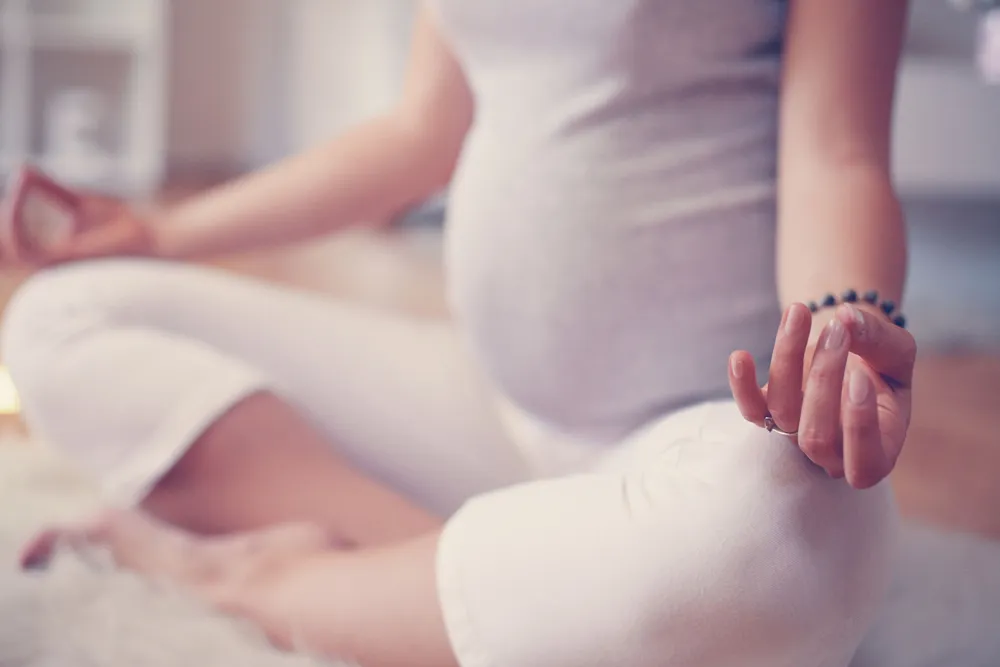
Most Effective Meditation Techniques During Pregnancy
There are various meditation techniques during pregnancy that provide numerous benefits essential for mothers during this sensitive stage of the motherhood journey. Here are the most prominent ones:
Breathing techniques, such as deep breathing, help improve sleep disorders, reduce heart rate, and relieve muscle tension caused by pregnancy. This is done by focusing on breathing in a specific pattern while placing a hand on the belly to observe the rise and fall of the breath, helping to achieve better relaxation and comfort. For example, you can inhale for 5 seconds, hold your breath for 3 seconds, and exhale for 4 seconds.
It’s worth noting that breathing positions vary depending on what is most comfortable for the pregnant woman. One of the most suitable positions is lying down with feet spread shoulder-width apart, then following the same breathing steps while breathing through the nose. You may also lie on one side with a pillow between your legs. So be sure to choose the position that feels best for you and find a quiet, gentle place to practice this wonderful habit.
Guided meditation relies on visualizing a specific object, like the sky, a flower, the sea, or even the process of labor itself—if that helps you manage the labor and delivery experience. This type of meditation focuses on the details of the imagined image. For instance, you might imagine your baby being born, growing in front of you, and how you cuddle them as they fall asleep in your warm embrace. This visualization helps bring calm and stability to your mind and body and reduces feelings of fear and pain associated with pregnancy and childbirth.
Third Eye Meditation is one of the simplest techniques to practice during pregnancy. It involves focusing on the area between the eyebrows—known as the third eye. When feeling stressed or anxious, close your eyes and gently focus on this spot. It helps relax the forehead muscles and boosts feelings of happiness and energy in your mind and body, as the pineal gland located in this area produces serotonin, the hormone responsible for happiness and well-being.
Vipassana meditation is quite similar to mindfulness meditation. It focuses on awareness of the present moment, acceptance of current emotions as they are, and controlling self-awareness. It is a very beneficial technique during pregnancy to reduce stress and fear, calm the mind, and ease the negative thoughts and emotions that often arise from constant worry about labor, pregnancy, and related matters.
You can practice this type of meditation by sitting on the floor with your legs in a comfortable position and your back straight. Make sure your body and muscles are relaxed, then close your eyes and focus on the natural sound of your breath. Bring your heart and mind into the moment and observe your thoughts and emotions as they arise, as much as possible. Repeat this technique for 10–15 minutes daily to achieve the relaxation and peace you desire.